One of the most common questions corporate event planners ask their AV production company is: “How early do you need to be there?” The honest answer is: earlier than you think. AV production isn’t a plug-and-play operation — it’s a construction and calibration process that has to happen before a single guest walks in the door. This guide breaks down the full day-of-show timeline from an AV production standpoint so you can build a schedule that actually works.
Key Takeaways
- AV load-in for a full corporate event typically begins 4–10 hours before doors open, depending on production complexity.
- Sound check and tech rehearsal must happen before the room opens to guests — non-negotiable.
- The AV timeline drives the catering, registration, room flip, and speaker prep schedules — not the other way around.
- The most common planner mistake is treating AV setup as the last thing to schedule instead of the anchor point everything else is built around.
- Strike (teardown) can take 2–4 hours and requires venue access after the event — plan for it contractually.
Why the AV Timeline Anchors Your Entire Event Schedule
Most event schedules are built from the guest experience backward: doors open at X, dinner at Y, program at Z. AV production, however, has to be built in the opposite direction — from the moment the AV truck can access the loading dock, forward. The time it takes to hang truss, run cable, position speakers, configure lighting rigs, set up video systems, and dial in audio is not compressible without sacrificing quality or safety. When the production timeline is squeezed, something breaks — usually during the live program.
Every other event timeline element — catering setup, room décor, registration table configuration, speaker green room access — has to work around the AV schedule, not compete with it. Getting this right starts with understanding what actually happens at each phase of the day.
A Sample Day-of-Show AV Timeline
The following is a representative timeline for a moderately complex corporate event: a general session with a stage, LED wall or projection, microphones for multiple speakers, and professional lighting. Adjust the lead times based on your production scope — larger builds and live entertainment require more time at every phase.
T-8 to T-6 Hours Before Doors: Load-In
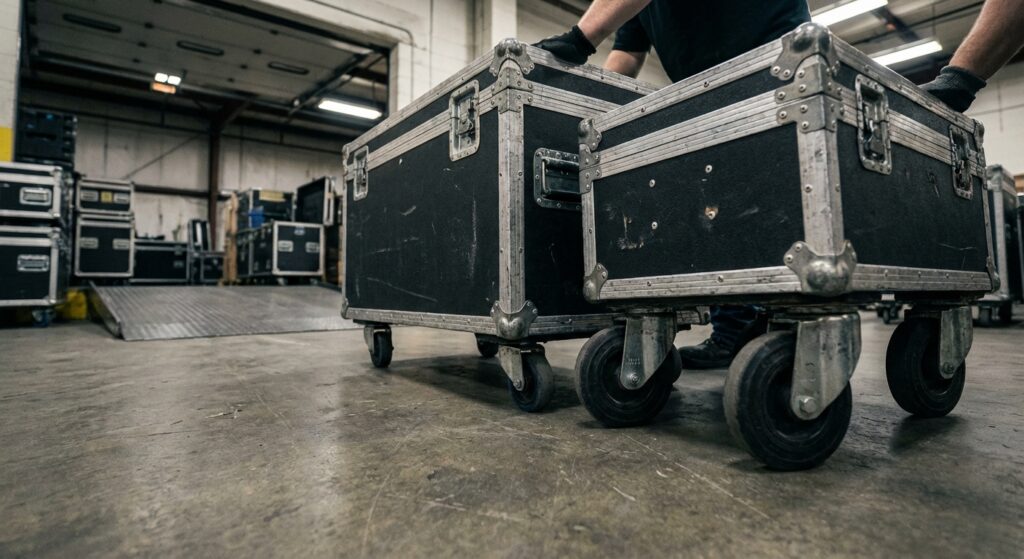
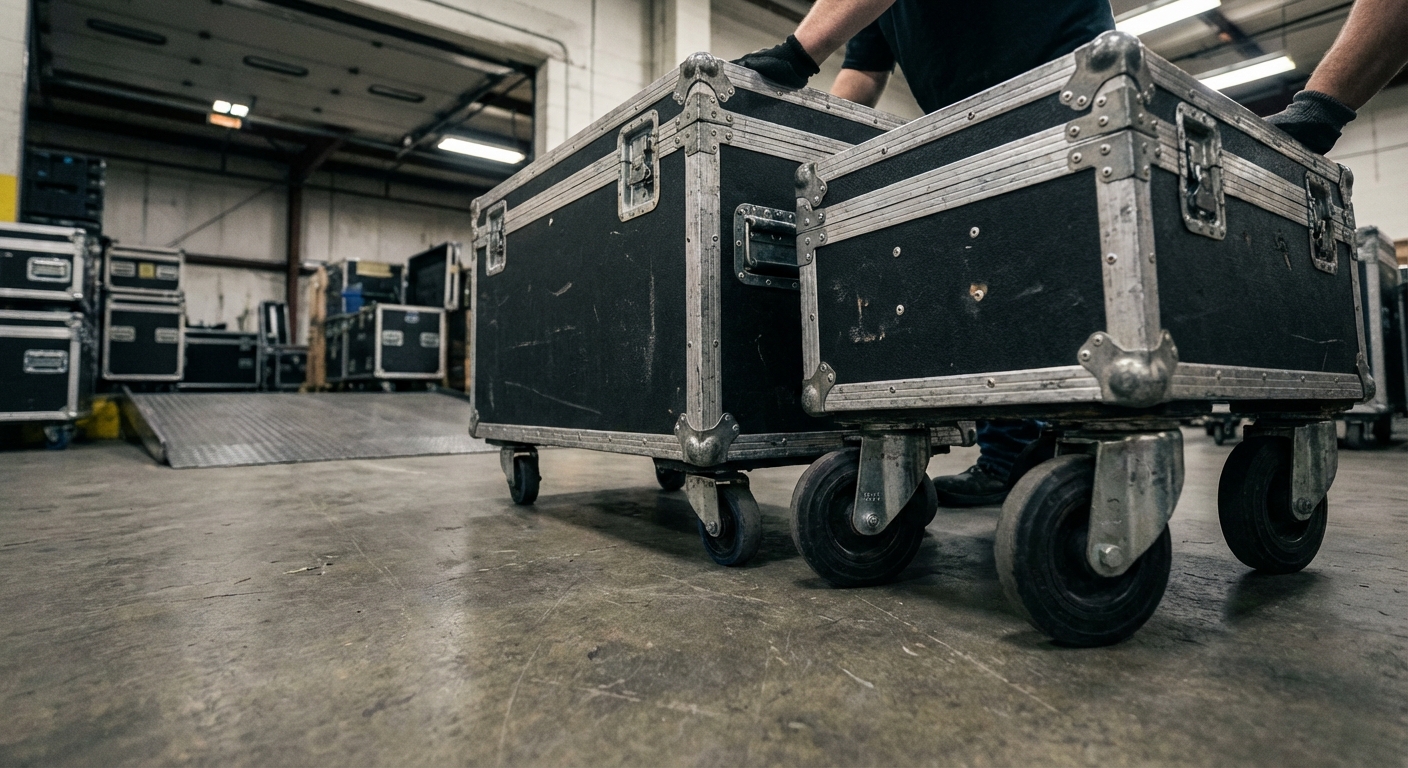
This is when the AV crew arrives with the trucks. Load-in involves physically moving all equipment from the dock to the room: cases of audio gear, speaker arrays, lighting fixtures, truss sections, video display components, cable runs, and control equipment. In a hotel ballroom with a single loading dock, this process can bottleneck quickly — especially if catering, décor, and AV are all trying to use the same service elevator. Coordinate load-in windows with your venue coordinator well in advance.
For larger builds — a 30-foot LED wall, a full truss grid, a complex lighting rig with 40+ fixtures — load-in can start 10–12 hours before doors. For a simpler corporate meeting setup, 4–5 hours is often sufficient. Your AV production company will give you a specific estimate once they’ve reviewed the scope and the venue layout.
T-6 to T-4 Hours: Build and Rig
Once gear is in the room, the build phase begins. This is when speakers get flown or ground-stacked, truss is assembled and lifted (if applicable), lighting fixtures are hung and patched, video displays are positioned and cabled, and the stage is constructed. This phase is physical, skilled labor — it’s not something that can be rushed without creating safety risks. Truss must be assembled and rated for load. Rigging points must be inspected. Electrical runs must be distributed correctly.
The room is generally not accessible to other vendors during this phase. Sharing a ballroom with a simultaneous décor build is possible but requires careful coordination — particularly if décor elements are going near or above the stage, or if the florist needs access to areas where cables are being run.
T-4 to T-2 Hours: Systems Check and Programming
With the physical build complete, the technical team moves to systems check: powering up all equipment, testing signal flow through the audio system, confirming video feeds and display output, programming lighting scenes and cues, and verifying that every piece of the system is communicating correctly. This is when problems surface — a bad cable, a firmware conflict, an unexpected interference issue with wireless microphones. Finding and solving these problems at T-3 hours is manageable. Finding them at T-30 minutes is a crisis.
During this window, the AV team also programs the show: lighting looks for general session, awards, and dinner; graphics and content loaded and tested on the video system; microphone frequency coordination completed and channels assigned. For events with a custom show flow, your FOH engineer and lighting operator will need a rundown document from you — the more detailed, the better.
T-2 to T-1 Hour: Sound Check and Tech Rehearsal
Sound check is when individual microphones are tested with the actual people using them — or stand-ins walking the stage. This is where the FOH engineer sets input gain, dials in the mix, and tunes the system to the room. It’s also when speakers walk the stage, get comfortable with confidence monitors, and test their presentations on the actual display system.
Tech rehearsal (sometimes called a “dry tech”) walks through the program cue-by-cue with the production team: video transitions, lighting changes, microphone handoffs, and any pre-recorded content playback. For a complex program with multiple speakers, video elements, and live segments, a tech rehearsal is not optional — it’s how you catch the moment a speaker’s laptop doesn’t match the confidence monitor resolution, or a lighting cue fires at the wrong time.
The room must be closed to guests and vendors during this window. It cannot overlap with room setup. Build this hour into your schedule as sacred, non-negotiable time.
T-30 Minutes: Final Checks Before Doors
In the 30 minutes before doors open, the AV team does a final walk of the room: confirming all wireless microphones are charged and in their holders, verifying video playback is ready on the server, confirming lighting is in the correct opening state, checking that confidence monitor content is displaying correctly, and doing a final audio sweep. The FOH position is staffed. The lighting console is live. The video system is on standby. Everything is ready before the first guest steps in.
Doors Open Through End of Program
The AV crew is at their stations for the entire event. The FOH engineer manages live audio — adjusting the mix as the room fills, riding microphone levels, cueing music beds, and managing any live audio feeds. The lighting operator executes the cue list and responds to real-time adjustments. The video/playback operator manages content transitions and confirms display output. If anything goes wrong during the show, the production team is the first line of response — which is why experienced event production companies staff these positions with seasoned operators, not just gear-runners.
Strike: Load-Out After the Event
Once the program ends, the production team begins strike — the full teardown and removal of all equipment. This is the reverse of load-in: lights come down, truss is de-rigged, speakers are packed, cable is coiled and cased, and everything goes back on the truck. For a moderately complex setup, strike typically takes 2–4 hours. Larger productions can take longer.
Strike is frequently forgotten in venue contracts. Many venues have hard out-times (midnight, 1:00 AM, etc.) — if your event runs long and the production team doesn’t have enough time to strike safely, you may face overtime fees from the venue or be forced to leave gear overnight. Confirm your load-out window in writing when you sign the venue contract.
Common AV Timeline Mistakes Planners Make
Building the AV schedule last. AV load-in time should be the first thing you confirm with your venue — before catering setup windows, before décor build times, before anything else. It determines what’s possible for the rest of the day.
Booking back-to-back room use without a crossover buffer. If a luncheon ends at 1:00 PM in a ballroom and your evening general session starts at 5:00 PM, four hours sounds like enough — but catering needs 45 minutes to clear, linen needs a turnaround, and your AV team needs to load in while all of that is happening. In practice, four hours can feel very tight. Push for five or six when you have flexibility.
Scheduling speaker A/V checks during the catering open. Guests should never be in the room during sound check. Keep these windows cleanly separated in your run of show.
Not sharing the run-of-show with the AV team in advance. Your production team needs to know the program order, timing, and cues before they arrive. A run-of-show document shared 48–72 hours before the event (not handed over during load-in) means a more polished execution.
Compressing the tech rehearsal when running behind. The tech rehearsal is the first thing to get cut when the day runs long. It’s also the most expensive thing to cut. Problems that surface during tech rehearsal cost minutes to fix. Problems that surface during the live program cost credibility.
Frequently Asked Questions
How early does an AV company need to arrive for a corporate event?
For most corporate events — a general session in a hotel ballroom with professional audio, video, and lighting — plan for AV load-in to begin 5–7 hours before doors open. Larger productions (LED walls, full lighting rigs, live entertainment) may require 8–12 hours. Your AV production company will give you a specific estimate based on your production scope and venue layout.
What is load-in and how long does it take?
Load-in is the process of moving all production equipment from the truck into the venue and positioning it for the build. Duration depends on production size, venue accessibility (elevator vs. ramp, dock capacity, distance from dock to room), and crew size. A simple corporate meeting setup might load in within 60–90 minutes; a full gala production with a large stage and video wall can take 3–4 hours of load-in alone.
Can AV setup happen while other vendors are in the room?
Yes, with coordination. Décor, linen, and catering teams often share the room with AV during build. The key is separating zones — AV takes the stage and front-of-house area while other vendors work perimeter tables — and communicating about shared pathways (cable runs across doorways, speaker poles near centerpiece areas). Your production company and venue coordinator should discuss this in the pre-event site walkthrough.
What is strike and when does it happen?
Strike is the full teardown and removal of all production equipment after the event. It begins immediately after the program ends and typically takes 2–4 hours for a standard corporate event. Confirm your load-out window in your venue contract — many venues have hard out-times, and running over can result in additional fees.
What should I give my AV team before the event?
At minimum: a detailed run-of-show document (program order, speaker names, timing, cues), all presentation files or a confirmed method for receiving them, a floor plan or room layout, venue contact information, and the load-in schedule. The more your production company knows before they arrive, the more their day-of time is spent executing rather than problem-solving.
Build Your Event Around a Production Timeline That Works
The best corporate events run like clockwork because the production timeline was treated as the structural backbone of the day — not an afterthought. Pro Connect Group works with event planners across Portland and the Pacific Northwest to build realistic, detailed day-of-show schedules that account for every phase: load-in, build, systems check, tech rehearsal, show, and strike. If you’re in early planning stages or want a second set of eyes on a timeline that’s already drafted, reach out to our team — that kind of early collaboration is exactly where we add the most value.