You have your CMP credential. You know room sets, registration logistics, F&B minimums, and run-of-show like the back of your hand. But when it comes to communicating exactly what you need from your audio, video, and lighting production company — the conversation can still go sideways. Not because you don’t know what you want. Because AV production is a specialized discipline with its own language, lead times, and assumptions. The meeting professionals who get the best results are the ones who know how to bridge that gap.
This guide is written specifically for CMPs: the challenges you’re most likely to run into with AV production companies, the solutions that actually work, and why having the right production partner makes every difference.
Key Takeaways for CMPs
- AV scope creep is preventable — but only if you document every room, every session, and every tech need before the first call.
- Share your run-of-show early — the more detail your production company has, the fewer surprises on-site.
- Breakout rooms have AV needs too — they’re often underspecified and the source of most on-site scrambles.
- Venue AV and outside AV are not interchangeable — understanding the difference saves budget and avoids conflict.
- Budget sticker shock is avoidable — transparent production quotes come from transparent briefs.
- The right AV partner should feel like an extension of your team — not a vendor you manage around.
Why This Communication Gap Exists
The CMP body of knowledge covers event design, financial management, site selection, logistics, and risk — but AV production sits in a technical lane that most planners encounter frequently without ever going deep on. Meanwhile, AV technicians and production managers spend their days thinking about signal chains, throw ratios, amp draws, and cabling runs. When the two worlds meet at a planning call, both sides often leave thinking they understood each other. Then load-in day arrives.
The good news: the gap closes quickly with a few structured habits. Here are the most common friction points CMPs face — and what to do about each one.
Challenge 1: The Scope Is Never Detailed Enough
The problem: You send over a program overview and the AV company quotes back a number that seems high — or they show up on-site and start asking questions you thought were already answered. Scope gaps create budget surprises and last-minute scrambles.
The solution: Build a room-by-room tech sheet before you brief any AV vendor. For each space, document: expected audience size, room layout, what content is being presented (slides, video, live demo, panel), whether there’s a stage or riser, what microphone types are needed (podium, handheld, lavalier, Q&A), and whether recording or livestreaming is required. The more granular your intake, the more accurate the quote — and the less padding the production company has to build in to cover unknowns.
Challenge 2: Breakout Rooms Get Treated as an Afterthought
The problem: The main plenary gets all the planning attention — and rightfully so. But your six breakout sessions also need microphones, screens, projectors or displays, basic audio, and in many cases a laptop feed and confidence monitor for the speaker. When breakout AV gets added late or communicated vaguely, it’s the thing that creates the most scramble during the event day.
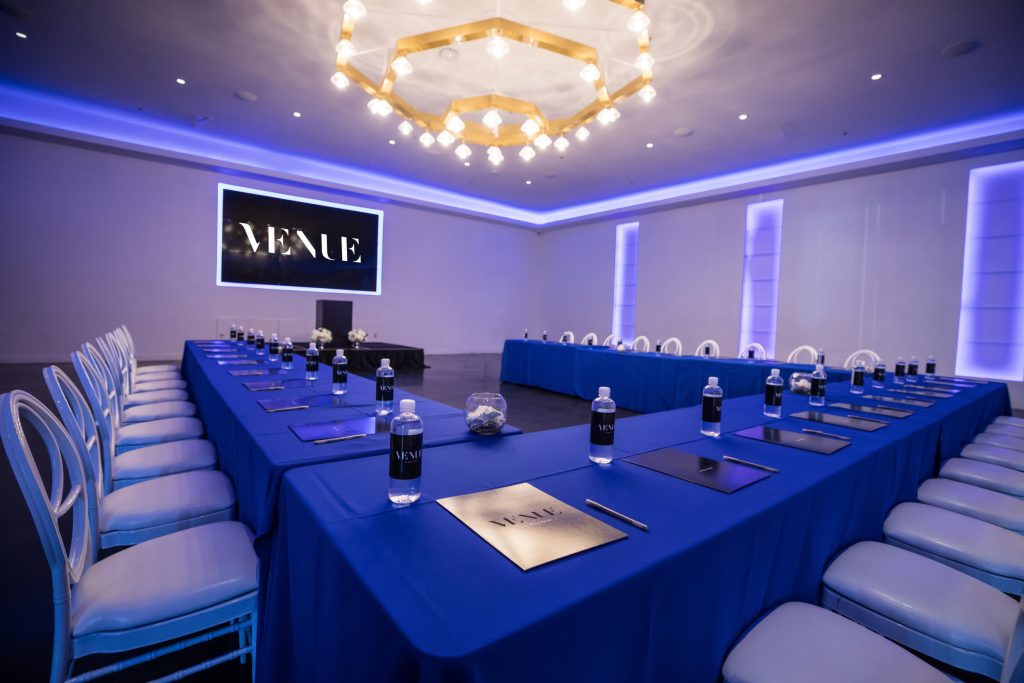
The solution: Treat each breakout room as its own mini-event in your tech sheet. Even a simple breakout needs: a display (screen size appropriate for room depth), a way to connect a presenter laptop, audio reinforcement if the room seats more than 30, and a microphone if Q&A is planned. Share your breakout session names, formats (workshop, panel, speaker), and expected attendance with your AV production company at the same time as the plenary — not the week before the event.
Challenge 3: Plenary Production Complexity Is Underestimated
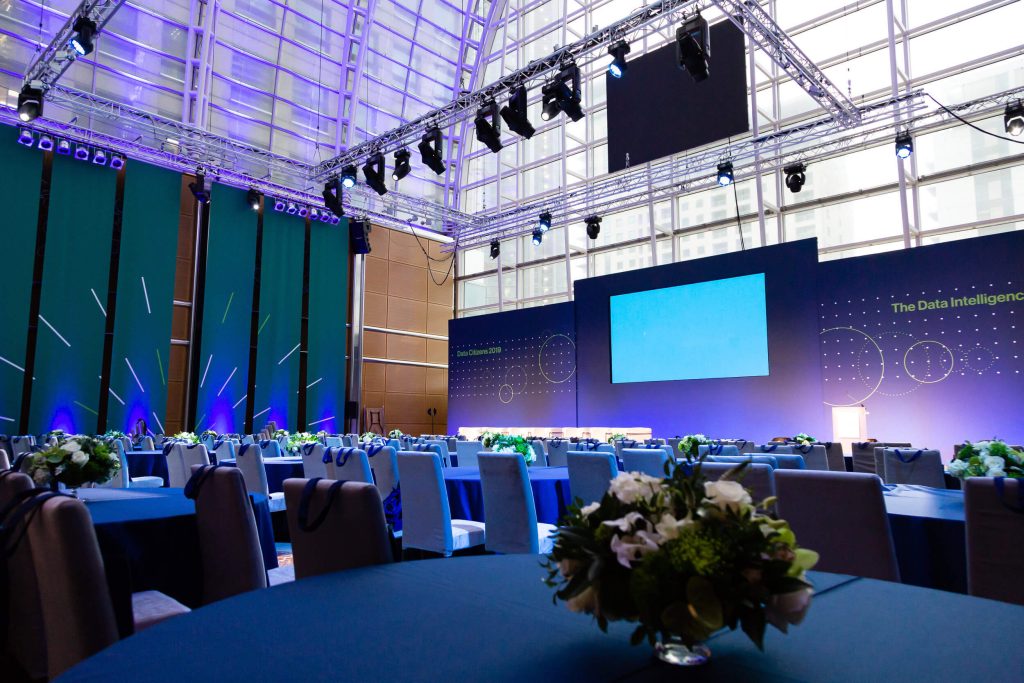
The problem: The main plenary session for an annual conference or leadership summit is the centerpiece of the event — and it has far more technical complexity than it appears from the outside. A well-produced plenary involves a line-array PA system sized for the room, a projection or LED video system for content display, stage and ambient lighting, a confidence monitor system for speakers, video switching for multiple inputs, and a skilled front-of-house engineer managing it all in real time. Underspecifying this because it feels like “just a big meeting” is one of the most common planner mistakes.
The solution: Walk through the plenary run-of-show with your AV production company before finalizing the quote. Cover every element: how many speakers take the stage, do any speakers use presentation clickers or need wireless confidence monitors, is there a video package or opening sizzle reel, are there any live demos or audience polling tools that need tech integration, and will there be awards, entertainment, or a band at the end of the evening program? Each of these elements has a technical requirement. Surfacing them early prevents “oh, we need that too” conversations at load-in.
Challenge 4: Venue AV vs. Outside AV Confusion
The problem: Most hotels and convention centers have an in-house AV company — often an exclusive or preferred vendor. Many CMPs assume this means they have to use them, or that mixing in-house and outside AV will cause problems. Both assumptions can cost money or limit your options.
The solution: Read your venue contract carefully. “Preferred” does not mean exclusive. Many venues allow outside AV production companies, sometimes with a drayage or patch fee. In-house AV is often convenient for simple setups, but for large plenaries, custom lighting, LED walls, or events where brand consistency matters, an outside production company you’ve vetted will typically provide higher production value and a more responsive client experience. Brief both sides clearly on who owns which rooms and systems to avoid jurisdictional confusion on-site.
Challenge 5: Budget Sticker Shock
The problem: You receive a proposal that’s significantly higher than the number in your head — or higher than what you budgeted based on past events. The difference is almost always either (a) your event has grown or changed since the last time, (b) the scope you communicated left room for assumptions, or (c) you’re comparing quotes at different levels of service and equipment.
The solution: Share a budget range when you brief your AV production company. This feels counterintuitive — won’t they just quote to the ceiling? In practice, a professional AV company will use a stated budget to prioritize: where to invest for maximum impact and where to find efficiencies. A rough industry benchmark for professional AV production at a mid-size corporate conference is 8–15% of total event budget, though this varies significantly with production complexity, room count, and run time. Being transparent about constraints leads to honest, actionable proposals — not padding.
Challenge 6: Run-of-Show Changes After Contracting
The problem: Your program changes — speakers are added, sessions are rearranged, a sponsor wants a video played during lunch. These happen constantly in event planning. But every change that affects technical requirements is a change order waiting to happen, and late changes add cost and stress for everyone.
The solution: Establish a clear change communication protocol with your AV production company when you sign. Designate a single point of contact on your side for all AV-related updates — ideally you or your event manager, not a junior coordinator who may not know what matters technically. Send updated run-of-show documents via email with a change log so nothing gets lost in a text thread. Flag “AV IMPACT” in the subject line whenever a program change has technical implications. Your production company will thank you — and your event will run better.
Challenge 7: On-Site Communication Breaks Down
The problem: You’re fielding attendee questions, managing F&B timing, handling speaker green room issues, and simultaneously trying to tell the AV crew that the opening video has been swapped. On-site, communication between planners and AV teams often happens in the margins — rushed, incomplete, and easy to misinterpret.
The solution: Before the event, agree with your production company on a simple on-site protocol. Radio channel assignments, a crew call sheet with cell numbers, a designated show caller (often the production manager) who owns real-time decisions, and a briefing window 30 minutes before each major session to confirm cues. In our experience producing events across Portland and the Pacific Northwest, the smoothest shows are the ones where the planner and the production manager have walked the full run-of-show the night before and are on the same page before doors open.
How to Brief Your AV Production Company: A CMP Checklist
When you engage an AV production partner, give them the following at the first briefing call:
- Event overview — type of event, total attendance, dates, venue name and address
- Room-by-room breakdown — each space, layout, seating count, and primary AV function
- Full run-of-show — or the most current draft, clearly marked with version and date
- Speaker and presenter list — including any known tech requirements or special requests
- Content inventory — slides, videos, live demos, audience polling tools, any pre-recorded content
- Livestream or recording needs — platform, expected concurrent viewers, archive requirements
- Venue contact and AV exclusivity status — confirm whether outside AV is permitted and any associated fees
- Budget range — even a rough range helps the proposal be more useful
- Key dates — when you need the proposal, when contracts must be executed, load-in and load-out windows
FAQ: CMPs and AV Production
How early should I engage an AV production company for a major conference?
For a large annual conference or multi-day event, six to twelve months out is ideal — especially if you need a custom lighting design, LED wall, or multi-room setup. For smaller corporate events, two to four months typically provides enough lead time for proposal, contracting, and pre-production.
What questions should I ask an AV company before hiring them?
Ask: Do they own their equipment or broker it? Who will be the on-site lead, and what’s their experience level? Have they worked in your venue before? Can they provide a detailed line-item proposal? What is their policy on changes after contracting? How do they handle technical failures mid-event?
Is it better to use the hotel’s in-house AV or bring in an outside company?
It depends on your event’s complexity and your brand standards. In-house AV is convenient for straightforward setups. For events where production quality, custom lighting, LED walls, or a consistent brand experience matters, an outside full-service production company typically delivers more value — and a more responsive client relationship.
How do I handle a speaker who sends last-minute presentation changes?
Set a content deadline with speakers (typically 48–72 hours before the event) in your speaker communications. For late changes, have a designated AV contact who can receive and load updated files. Communicate the deadline to your production company so they can plan for content load-in windows during setup time.
What does a professional AV production company handle that venue AV typically doesn’t?
Full-service production companies like PCG bring custom lighting design and intelligent fixtures, LED walls and advanced video systems, dedicated audio engineers mixing live, show calling and production management, rigging and staging, and the ability to design your event’s technical environment from scratch — not just plug into what the venue already has installed.
Pro Connect Group: The AV Production Partner Built for Meeting Professionals
CMPs run events where the margin for error is zero. Your reputation, your organization’s reputation, and your attendees’ experience all ride on execution. Pro Connect Group provides full-service audio, video, and lighting production for corporate conferences, association meetings, leadership summits, galas, and multi-day events across Portland and the Pacific Northwest. We speak planner — we understand run-of-show, room blocks, load-in windows, and the reality that things change. We work as an extension of your team, not a vendor you have to manage around.
Whether you’re producing a 50-person board meeting or a 2,000-person annual conference, contact PCG to walk through your program and get a production quote built around your actual event — not a template.